When a shop needs
to be a platform.
Large catalogues, several sellers, members, bookings, processes a template cannot follow. We design and build online platforms around how your business really works, and you own what we build.
Specialist online shops
For shops where a standard theme falls short: made-to-order products, trade prices, unusual delivery rules or thousands of product variations.
Large catalogues
Big product ranges people can actually search, with filters, variants and stock that stays correct across every channel.
Marketplaces
Several sellers on one site, each with their own listings and dashboard. Commission is taken automatically and payouts go through the payment provider.
Memberships and subscriptions
Paid members areas, repeat orders, subscription boxes, courses and content behind a login.
Bookings and ordering
Classes, tables, rooms, rentals or local delivery, with availability that updates itself and confirmations sent automatically.
Customer and trade portals
A private area where customers reorder, download invoices or follow a job, and trade accounts see their own prices.
An online shop, start to finish.
A typical build for a shop that has outgrown its template.
Products and variants
Sizes, colours and bundles, each with its own price, photos and stock level.
Search and filters
Fast results that forgive typing mistakes, with filters that match how people really shop.
One set of stock figures
The website, your shop floor and any marketplaces draw on the same numbers, so nothing is sold twice.
Checkout and delivery
Card and wallet payments, delivery rates worked out automatically, printed labels and click and collect.
Customer accounts
Order history, easy reorders, saved addresses and trade prices for business customers.
Reasons to come back
Wish lists, discount codes, gift cards, abandoned basket reminders and newsletters.
A web app, built around one business.
Software for the work that spreadsheets and email can no longer hold together.
Logins and roles
Staff, managers, customers and suppliers each see only what they need.
Your own workflow
Jobs, quotes or approvals move through the same steps your team already follows.
Calendars and bookings
Availability, reminders and scheduling, kept in one place.
Documents and invoices
Quotes, contracts and invoices created from the data already in the system.
Connected to your tools
Accounting, email, payments and CRM exchange data on their own.
Reports you can use
Live dashboards and exports that answer the questions you ask every week.
A shop customers enjoy,
and the tools behind it.
What customers see is only half of a platform. The other half is the screen your team opens every morning.
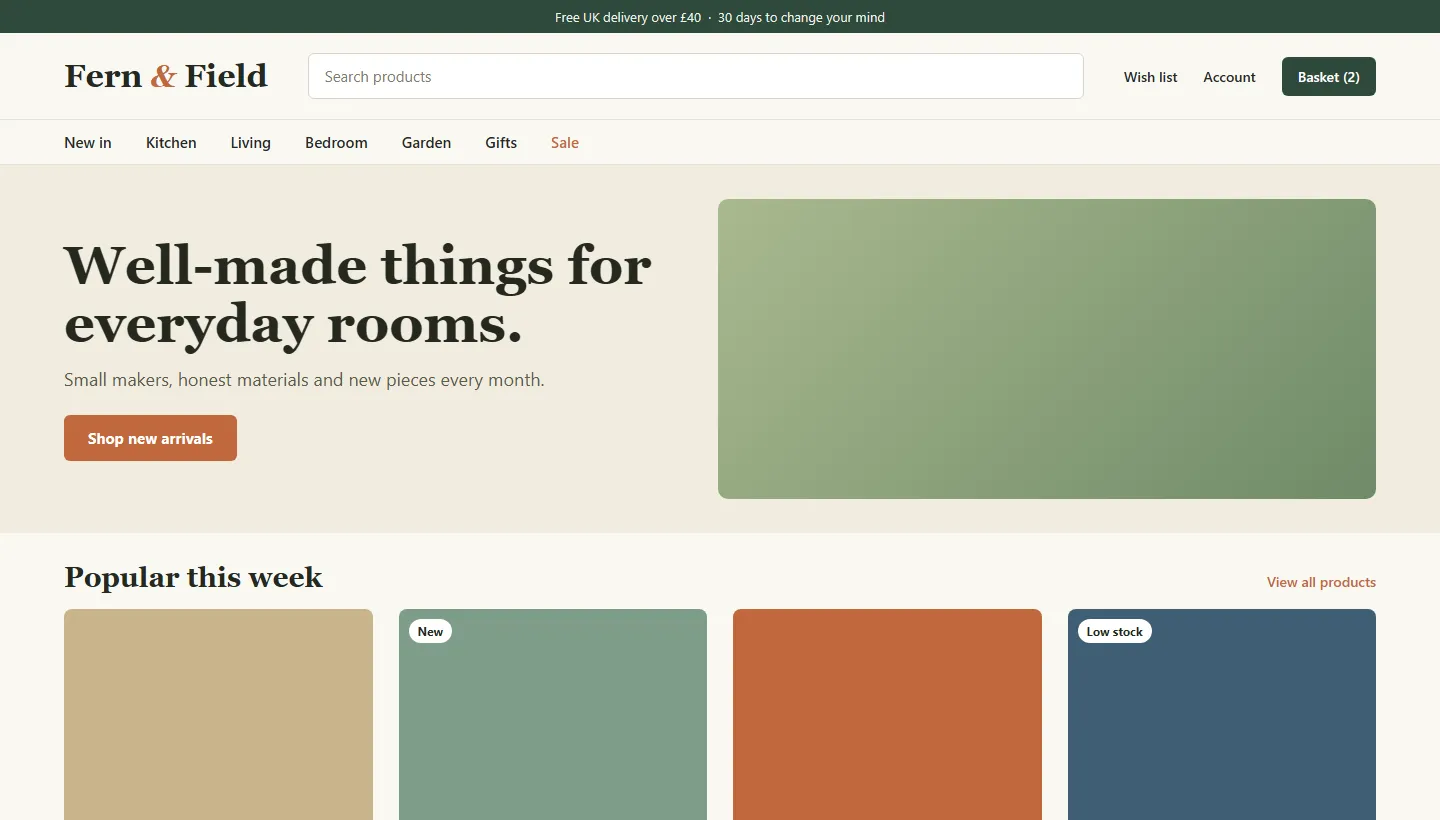
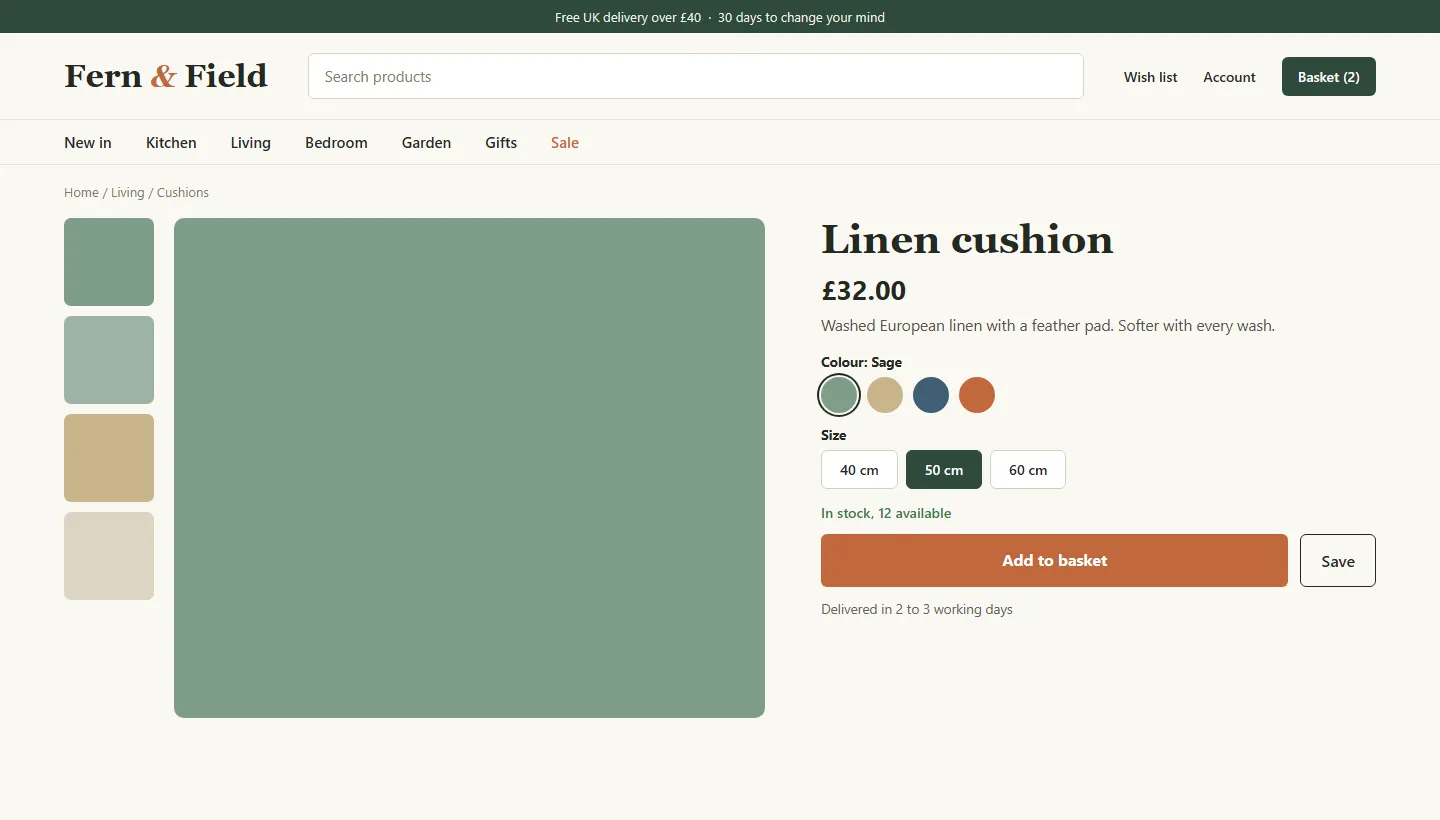
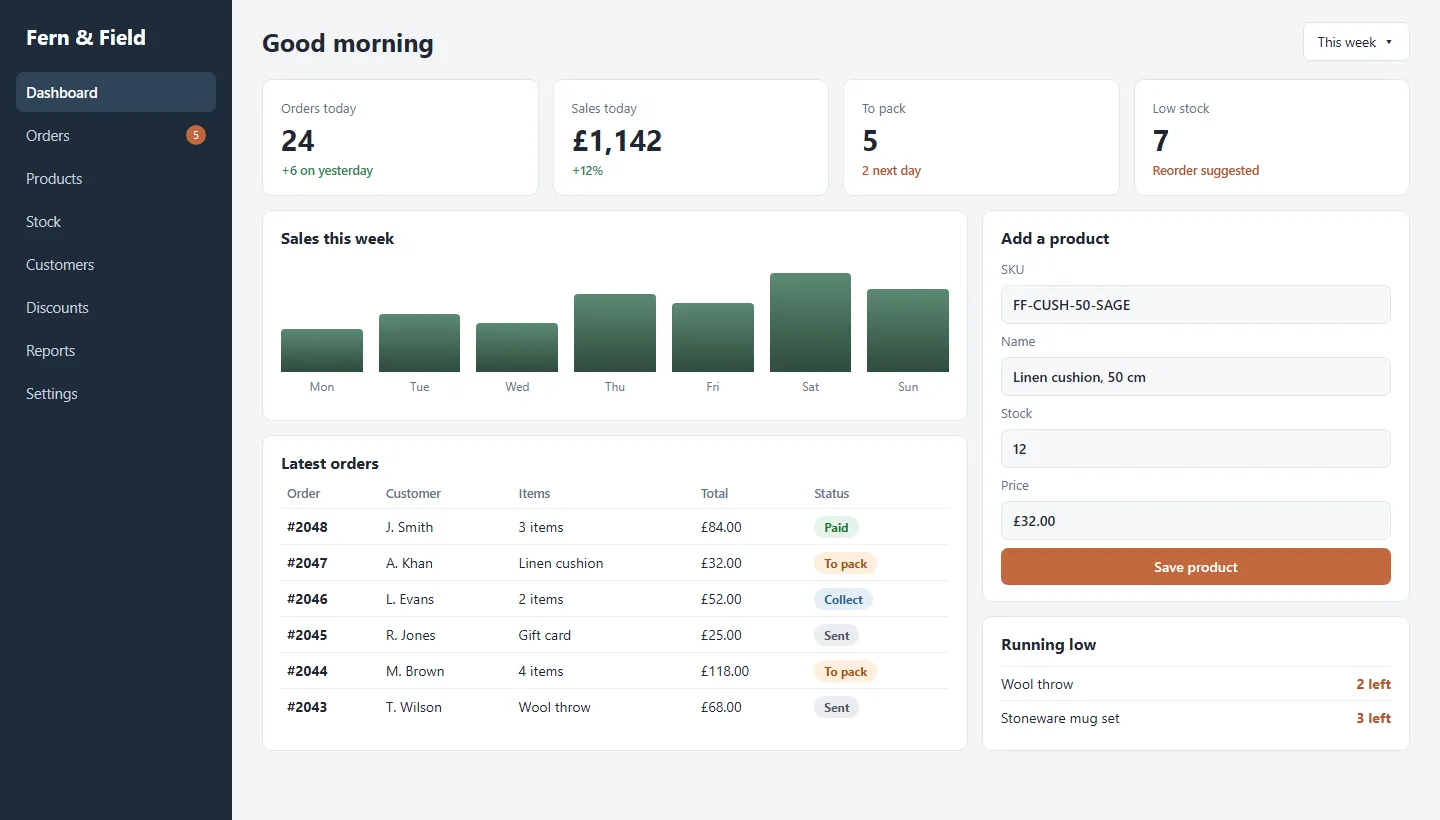
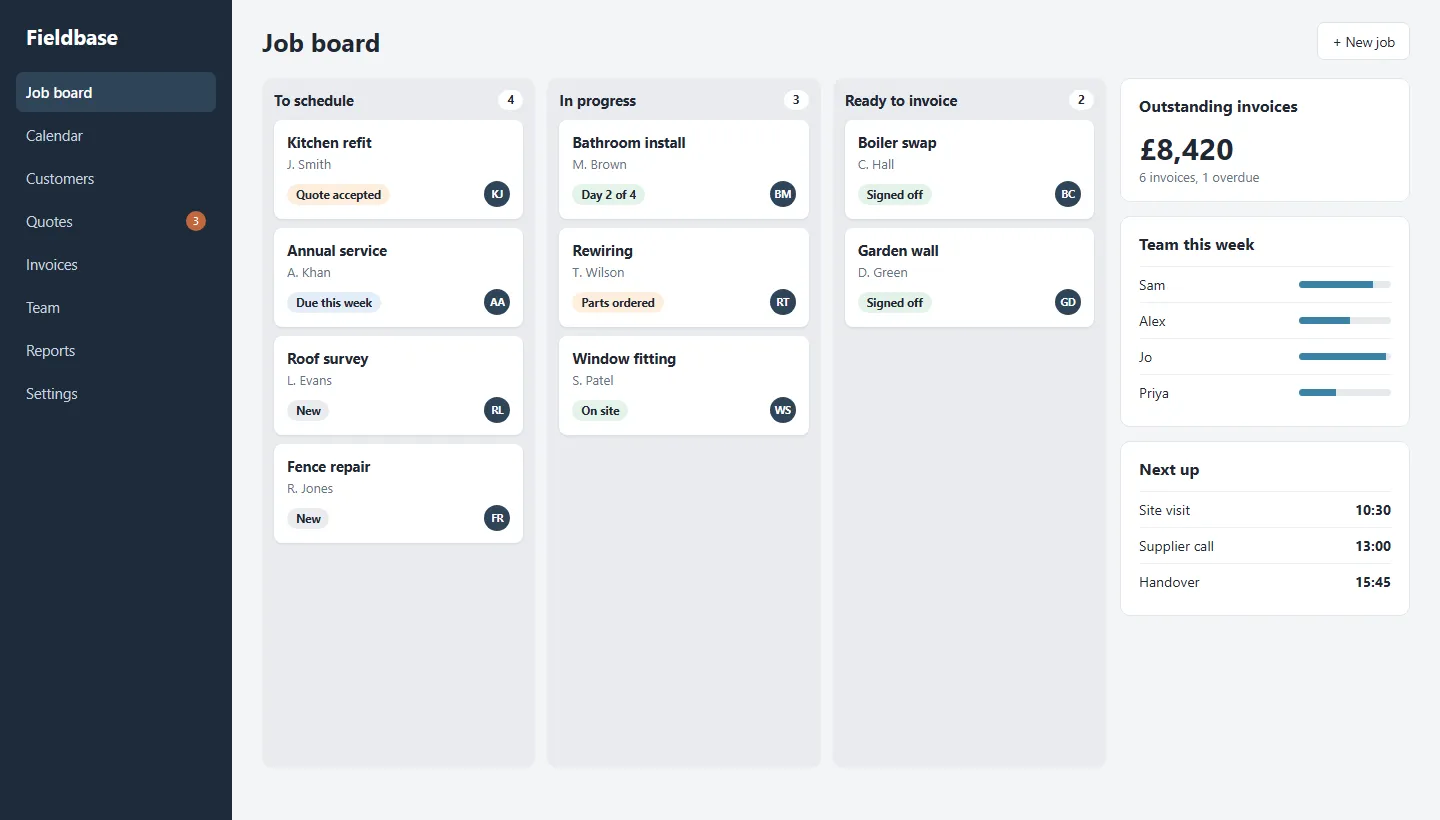
Concept designs to show the idea. The businesses and their data are made up, and coloured panels stand in for your own photos.
Off the shelf
or made to measure?
You may not need custom software at all. We will tell you which route fits, even when it is not the biggest job for us.
A hosted shop
Right for a standard shop that needs to open quickly.
Low set-up cost, but monthly and transaction fees, and limits on how far it can bend.
A WordPress shop
Right when you want a shop you can edit yourself, on hosting you control.
Plenty of plugins, but it needs regular care and can slow down as it grows.
Made to measure
Right when the way you sell is what makes you different, or workarounds cost more than building it.
The highest first cost, no platform fees to us, no limits, and it is yours.
We map how you sell
What you sell, who handles an order, and what goes wrong today. You get a written plan: what comes first, what it costs, and what can wait.
We build the core first
Catalogue, basket and payment before anything else, on a private preview link, so you can place a real test order early.
We test every way of paying
Automated tests cover the checkout, failed payments and stock limits. Your existing products and customers are brought over and checked.
We launch and look after it
A calm launch with redirects from your old pages, then updates and new features when you need them.
The unglamorous parts,
done properly.
- Secure card payments
- An admin area your staff can use
- Order and stock emails
- Fast pages on every phone
- Product data for Google
- Import from your old system
- Privacy and cookie setup
- Automated checkout tests
- Backups and a way back
- Documentation you keep
What we can build,
and what we build it with.
We pick the tool once we understand the job. Laravel and WordPress are our usual starting points.
- Online shops and B2B ordering
- Multi-vendor marketplaces
- Booking and reservation systems
- Customer and supplier portals
- CRM and sales tools
- Stock and warehouse systems
- Quoting and invoicing tools
- Job and field service management
- Membership and subscription sites
- Online courses and learning platforms
- Staff intranets and internal tools
- Dashboards and reporting
Web apps
- Laravel
- Filament
- Symfony
- Node.js
- NestJS
- Next.js
- Nuxt
- React
- Vue
- SvelteKit
- TypeScript
Online shops
- WooCommerce
- Shopify
- Magento
- PrestaShop
- Shopware
- Medusa
Websites and content
- WordPress
- Astro
- Strapi
- Directus
- Payload
Data, payments and hosting
- MySQL
- PostgreSQL
- Redis
- Stripe
- PayPal
- Docker
- Playwright tests
- Claude API
Which frameworks do you build with?
It depends on the job. Laravel is our usual choice for custom web apps and platforms, and WordPress with WooCommerce suits shops and sites you want to edit yourself. We also work with hosted platforms such as Shopify and with modern JavaScript frameworks when a project calls for them.
Can you build a shop with a large catalogue?
Yes. Large ranges are where a standard template often struggles: thousands of products, variants, filters and stock shared with a physical shop. We plan the catalogue and stock first, then build around them.
Should I just use Shopify instead?
Often, yes. If you sell standard products and want to open quickly, a hosted shop is the sensible choice and we will say so. Custom work makes sense when your way of selling does not fit, or when fees and workarounds cost more than building it.
How do you price a platform?
Every platform starts with a short call and a written plan. You get a fixed quote for the first stage before any work begins, so there are no open-ended bills.
Can you bring over products and customers from my old site?
Yes. We import products, customers and order history where the old system allows it, check the result with you, and redirect the old addresses so you keep your Google rankings.
Do I own the platform?
Yes. The code, the documentation, the hosting accounts and the data are yours. We use well-known technology so any good developer can work on it later.
Do you work with businesses outside Torbay?
Yes. We are based in Paignton and meet local clients in person, and we work remotely with businesses across the UK.
Got something to sell
that a template cannot?
Tell us what you sell and how it works today. We will come back with an honest view of the simplest thing that would do the job.